Monday, June 29, 2015

Updates


Brand Watch
Heinz Fiasco
The Heinz fiasco has been in the lime-light for months now- so many focussed articles and dedicated blogs have popped up in a few months to discuss the same.  Heinz has final come up with an official apology to its consumers for it. It apologised to consumer in Germany after a QR code on of one of its bottles contained a link to a pornographic website. According to Heinz -the code was out of date and the company was taking steps to prevent it happening again,
The QR code, was placed on the back of the bottle and was required to be scanned by people using a smartphone in order to access content online for an online competition. The link was supposed to direct to a site where participants could design a label for the bottle of Heinz Tomato Ketchup Hot. This was done as part of a promotion by the company but instead fired back as the URL was hosting porn.

Kalyan serves as a learning to other brands
Kalyan Jewellers recent ad campaign serves as lesson to most brands. There recent ad screening Aishwarya Rai as the brand ambassador and a malnutrition, dark and lanky kid serving as a servant in the back was seen as racist and pro-child labour.

Nestle trying to reposition the brand
Nestle is planning to come up with a brand new snack that will serve as an alternative to Maggie ad will help the brand in repositioning it as more healthy. According to their upcoming plan-b their new product could be a either a ready-to-eat  or ready-to-cook food. This will involve launching the old classic Maggi noodles in a new format. According to Nestle- Food has never been safer. More than the product, it is the public perception, they have to work on. The only thing that interests them, right now is to have their product back as soon as possible and to clear up the  controversy. According to Brand Finance, Maggi is expected to lose more than two hundred million dollars in brand value after the FSSAI ban.
Coca-Cola ‘s happy association with Mad-men
Coca cola has been associated with the American TV series mad-men for years now. The T.V show has always created a rosy picture for the brand and it was with this trust that the brand allowed the television series to use its hill-top advertisement without asking any questions. At last, the entire ad of 60 seconds was run and was used to put an end to one of the most successful series in the country. To Coca-Cola this proved to be was an amazing, unexpected gift.


Media

E-COMM initiating conversations on Twitter
The new age e-commerce companies are taking on each other on social media platforms like Twitter. Sometimes it seems like just bantering but on few occasions  the Companies might get into an ugly brawl. Be it the recent tussle between Amazon and Zomato or the casual flirtation between Snap deal and Free charge, the brands are surely loving it and taking it as an opportunity to show themselves as cool and witty to the new age customers


Dabur to hire Star-comm Media vest
Dabur India has given all its media duties to Starcomm media vest group (SMG). In the words of KK Chutani, executive director, marketing, Dabur India, “Dabur has adopted a fresh approach to its media strategy with a focus on the younger  generation and emphasis on use of digital media as a way to create the right impact”. SMG has become the first agency in the history of Dabur to solely take care of the entire media planning and buying. SMG is keen to help Dabur deliver the business goals

Digital is solving problem
Going digital in the music industry is surely helping the Industry fight piracy. There are lot of music apps with Saavn leading the pack in India. The India-New York based start-up is spending a lot on advertising with brand ambassadors like Ranbir Kapoor on board. Saavn has hired McCann as its creative agency and has also tied up with Prasoon Joshi for its campaigns and help improve user engagement further. It is currently competing with Times Internet’s Gaana and Airtel wink in the market.


Brand launch-

Xo lo to launch its online only brand Black in June

The Noida based company backed by Lava is also entering the online-retail only segment in the mobile phones category. A sub-brand Black will have 5-6 handsets launched in this year. The First phone under this will be launched in June with a dual rear camera and priced below Rs 15000. All upcoming mobiles will also be in the range of 10000 to 20000 and will be 4G enabled.

Mahindra to launch the new face of XUV 500 in the end of May
Mahindra XUV 500 facelift is all set to launch on 25th may. The changes made in the car have been strictly cosmetic like the new alloy wheel pattern, the L shaped  chrome finished fog lamp etc. The other features like the engine churning out a hefty 140bhp and 330Nm of torques while also being fuel efficient by returning 15.1km/l remain the same. The company has a lot of hopes to capture the market with the improved version of the XUV 500.


Jab they failed || Failure of Orkut

Everybody is busy today. Some people are busy with their work, some of them with their families and some of them are busy doing nothing but everyone is busy. So it is natural that you may not know what your best friend is up to after he moved to Mumbai or what is happening in your favorite cousin’s life cause he is so busy making his career. You may also like making new friends and see what is up with your favorite Band or actor or sportsperson. A Social Networking website fortunately, covers all the above needs. Facebook, Twitter, Myspace, are all such websites which make it possible for you to know what your loved ones are doing, finding new loved ones and also making sure that your loved ones know about you. Google’s Orkut, was one such website. Unfortunately, it is not there anymore. It saw its last day on 30th September, 2014. Only 10 years old, died very young. There was a time in India, before Facebook came into picture when everyone who knew about social networking was on Orkut. Even I started social networking with Orkut. Everyone was happy with it but then all of a sudden it saw a sudden decline in its users. Let’s find out why did this happen.
Orkut wasn’t evolving fast enough. If compared to Facebook, the user interface of Orkut was a little complicated and didn’t come up with new features as fast as Facebook. If you observe, Facebook keeps coming up with minor changes all the time which shows us that Facebook gave importance even to the smallest things which made the experience for the user better, the option of showing ‘how you are feeling?’ while posting a status is one such example. Also ‘Scrapbook’ which was a public chat option on Orkut which was similar to the wall on Facebook was not as much fun as it is on Facebook. Privacy settings of Orkut was also one of the issues. It had very basic settings and didn’t think about a situation where different people would want different settings. Because of this people started moving to Facebook. Scaling up was also an issue. The initial version of the website had too many technical issues ad it wasn’t made a serious project but only as a pet project which People in Google are allowed to do. Even after it became popular there were still issues and users could find the famous error page ‘no donut for you’ too many a times. This just proved that for a huge company like Google where simultaneously there are multiple projects taking place Orkut was just another pet project and hence wasn’t given attention that it ideally deserved. Orkut also could not come up with a concrete strategy of monetizing itself. Like Facebook has successfully made it possible for advertisers to post ads and not particularly spoil the experience for the users. Orkut never had a plan as to how will it start making money and therefore from the early stages it was clueless about this issue. Even when it was doing well in 2009 it didn’t have a plan to make money from advertisements or any other source.

Learnings: Internet has made the world smaller than we can even imagine. One can talk to her friend in Greece while sitting in China and order food from a place from somewhere in the city and also give a review about it on social media. But there is a negative side to it as well from an organization’s point of view. If you falter at any moment be ready to bear the brunt on social networking websites like Facebook, Twitter etc. Even these websites aren’t saved from the public outcry. They have to manage issues related to privacy, experience given to the users and make sure that no public sentiment is hurt. The biggest learning here is that for a social networking website experience of the user is everything. Things should only get simpler and better for a user which Facebook has successfully managed to do so far. Also, a long term view as to how will the website be scaled up and how will it generate revenue should be thought of. Snapchat had a plan and we can finally see It in action with short advertisements already started in the western countries which generate revenue for it. 

Radical Thoughts || The secret behind the art of successful ad-making

Successful ad-making is a subtle art. One that requires the designer to have a consummate understanding of the nation’s heartbeat or atleast the target audience’s pulse. The O&Ms and the JWTs of the world strive to unravel the many secrets of this Pandora’s Box but what is the tool that allows them to do so? This is where semiotics comes in. Semiotics is the study of the signs, symbols & their significance in human life. To fully understand semiotics one has to understand the cultural nuances of their target audience. Valid arguments can be made that a plethora of cultural backdrops exist in our nation however one has to understand that these cultures are interwoven through a common link. It is this link that is the crucial key to the lock. This tiny thread that can unravel the Pandora’s Box & provide the seeker with an idea that can appeal to all.

The old Bajaj ad with its extraordinarily catchy tagline of “Humara Bajaj” & the oh-so-delicious ‘Jalebi!’ ad by Dhara cooking oil are delightful examples of semiotics executed to sheer perfection. Let’s take them one by one. The “Humara Bajaj” ad established Bajaj scooters as the stalwart of its time, with the ad not only showcasing the importance of the scooter in the life of the common man but also capturing the everyday routine of India & the special position the scooter held at that time as the family’s personal mode of transport. The ‘Jalebi!’ ad is all the more special because it invokes nostalgia in the adult viewers by painting the perfect picture of a child’s delight at the mention of his favourite sweetmeat – Jalebi! With the roles portrayed to perfection everyone in the target audience is able to relate to the ad which is exactly what was intended. That’s not to say however that semiotics was only applicable in the 80s & the 90s of the previous century. There are a number of examples that still depicts the application of semiotics & its all-capturing characteristic. The “mauka-mauka” ads that played upon the Indo-Pak cricketing rivalry appealed to every Indian regardless of whether they were a cricket fan or not & the latest “Aur dikhao” ad by Amazon.com also has a similar attribute as it wittily highlights the desire of most Indians to have more choices at their disposal even when a particular option has appealed to them.

Ishtihaar || AGILE MARKETING – quick and effective

In today’s world with technology growing at a brisk pace, no business plan or business strategy is perpetual. With the introduction of new, small but audacious firms having a dynamic approach to their business the big behemoths are under threat of revising their business strategies periodically. A new business term “agile strategy” is becoming a buzz word in the corporate world which is revolutionising the orthodox thinking of various businesses and their modus operandi. Customers today are becoming very peculiar to their needs and are not ready to compromise on their existing options. They are more inclined towards the individualised tweak of the product and the entire campaign by a company starts revolving around the individual needs of a consumer and hence the agile marketing which takes care of the two way interaction with the customers and use their existing limited resources in the best possible way to cater to the largest number of the consumer base. The orthodox methodology involves designing a mass campaign for a large consumer base and be indifferent to the individual requirements of a consumer. This perception of the marketers requires to be changed and agile marketing plays a handy role in doing so by reaching out to each individual customer and trying to provide them the highest levels of satisfaction.
The very first step in agile marketing is to use existing resources to satiate consumer needs in the best possible way. Most of the other marketing concepts remain the same adapting to the changing demands of consumers.
Agile marketing revolves around needs of a consumer. As the needs of the consumer and the experience of the customers in buying and using the product becomes a decisive factor for a company while designing their advertisement campaign the priorities for a marketer begins to change with the trend from the existing and robust strategies. It all works on aligning marketing with the business and sales goals of the organisation along with doing the job at a brisk pace and then documenting the results with transparency and a lot of accountability.
In agile marketing, a company starts with the marketing backlogs which is the list of all the potential activities which a company can do. The backlogs go on to become the “wish list” for the company and they have to work hard to fulfil this wish list. Unlike agile marketing other strategies break the target into various minute pieces and tries to achieve them sporadically.

The first help which a company gets by adopting agile marketing is to break the jinx of thinking in a traditional fashion and start thinking on new lines. The biggest advantage of agile marketing is that it reduces any misunderstanding between marketers and consumers. In agile marketing, the marketing team meets with the “executive management for sales” for 30-60 minutes & then decide upon what are they working on and sets up a new priority. The team tries to add new ideas to the backlog (wish list) and starts working on the same as soon as possible. The duration of this work is 2-4 weeks.
This duration of 2-4 weeks is called a “sprint”, after the sprint is over a review team is called upon which comprises of the executive management and the sales personnel who take a call on the work of the sprint team and different thoughts are shared at the same platform following which remarks are given. The entire review system is done in order to keep the sense of transparency and accountability intact. The review for such a sprint becomes important as it clarifies how the priorities work and what all new fundamentals are to be added for the future in order to make such a sprint successful.
For the marketing team it becomes very important to have a fair knowledge of the customers’ requirements and their take on the products or the services offered. In this short span (sprint) of 2-4 weeks the marketers are the best judge to understand the ongoing trend. Thereafter a decision is made regarding the existing marketing strategies and what all changes in the strategies and the priorities can be brought about, in order to cater to their consumers in the best possible way with the existing limited resources.
There have been many instances when a company’s marketing wing came out with a new technology and the marketing campaign for the same, for a very small period of time and tried to gauge the thinking of consumers thereby trying to build upon the genuine responses received from their customers.  

So, for a company, big or small, “Agile Marketing” is effective.

Brand Story || FedEx

You would have looked at the logo of FedEx several times. Have a look at it again. Do you see something peculiar?
No? Try finding the arrow. Yes, that forward arrow between E and x. That is the beauty of the FedEx brand. It talks about moving forward towards the future.
Founded in 1971, the company started as a courier delivery service but it has grown into the 5th largest airline in the world. With over 656 aircrafts in air, FedEx has pioneered the art of overnight delivery.
FedEx was not always FedEx. It was called Federal Express for over 2 decades from the day of its inception. In early 1990s, the company had made such a mark on the package delivery market that its name was almost used as a verb. Customers started calling it FedEx instead of Federal Express. Hence, in 1994 the company rebranded itself. The name of the company was changed to FedEx Corporation.   
FedEx is not a normal package delivery company; it is a premium courier delivery and supply chain solution provider. You will have to shed out 200 bucks instead of 40 if you wish to send a few documents weighing 100g from New Delhi to Mumbai via FedEx. Now why  FedEx commands such a premium?
Firstly, FedEx guarantees timely delivery of a product, similar to the Dominoes’ Pizza. Its delivery network spread across 220 countries is so strong that it guarantees that it will return all the money paid by the customer back if the parcel is delivered 60 seconds later than the committed time.
Secondly, it ensures no wear and tear of a product. You can send things as delicate as a mirror through the FedEx channel. It has even delivered Beluga Whales and Dolphins from one place to another. They were alive and healthy after reaching the destination. A large number of luxury carmakers use the FedEx Custom Critical to transport delicate windscreens and engines from one country to another.
Thirdly, FedEx spends billions of dollars each year as marketing expenditure. FedEx also sponsors various sports that share the attribute of speed, reliability, precision, teamwork and flawless execution. It has association with NFL and NBA teams. It also has a racing competition named FedEx racing. FedEx also broadcasts television commercials all across the globe.
Now, all this marketing ensures customer delight. There are thousands of e-commerce businesses that ensure customer delight by using FedEx as a channel partner. People in USA are delighted to see a parcel arrive with FedEx (the premium package delivery service).
Over the years FedEx has developed brand architecture and naming system in such a way that it extends the FedEx brand without compromising on its integrity. FedEx Express, FedEx Ground, FedEx Freight, FedEx Custom Critical, FedEx Supply Chain Services, FedEx Office all use the same FedEx logo but with a different color. This ensures that the company can leverage its existing brand image even after creating a significant differentiation in the product offerings.
FedEx is not just a combination of logos, good colors, a few videos and event sponsorship but it is a powerhouse of great customer service. In year 1994, it became the first package delivery company to provide online support through its website. It was able to receive orders through its website and also able to assist its clients at any time they wanted.
FedEx is a player in commodity business. Package delivery has been there since ages. Its innovative methods have ensured that it continues to charge a premium for the amazing service that it has to offer the world. The constant investment is branding saves the company from getting into a price war with its competitors and hence ensuring profitability. 
FedEx is a pioneer in the industry. It has always led the change in the market place and has displayed amazing results to the onlookers.
However, it might face some challenges to position itself well in the emerging markets of the world. It will be difficult to command the same level of premium from the price sensitive customers.
Also, cab aggregator services like Uber can disrupt the market with a new kind of delivery system through cabs. Ola Cabs in India has started Ola Chef, which delivers food to customers. FedEx can actually gain some cost advantage by partnering with cab aggregators for the last mile delivery.
All said and done FedEx is an awesome brand. It is a great case study for young marketing enthusiasts like us to learn and get inspired from.

Monday, November 10, 2014

RADICAL THOUGHTS: The Return on Advertorials

Varsha Poddar | IIM Shillong

The journalism ethics of Bennett Coleman & Co, the publishing house that owns The Times of India came under a dubious light when the firm admitted to publishing ‘advertorials’ or articles that looked like normal press coverage but were actually paid for by a party with vested interests. Thereafter, advertorials became a sort of pesky norm that newspaper readers made reluctant peace with. Some newspapers then came clean about it and began to publish separate advertorial sections so that readers could discern between genuine reportage and swayed reviews. However, now, once again advertorials are surreptitiously creeping into a space that had previously been free of any vested-interest broadcasts – social media. Social media holds the power to make content go viral. Sites like buzzfeed, thoughtcatalog, boredpanda, to name a few, and their indian counterparts such as scoopwhoop, allindiabakchod and storypick carry posts that are essentially everyday occurrences boiled down to simple, laundrylist- like content. These are shared over and over again on social networking sites because people connect to them instantly. However, a lot of posts from these sites are actually nothing but advertisements pretending to be normal content.

Take for instance, BuzzFeed’s post “10 Summer Emojis That Should Definitely Exist” which was actually sponsored by Starbucks or “What should you do before summer ends” sponsored by Pepsi. Posts such as there pass as organic as the title and URL give no hint whatsoever that the content is actually an ad. As a result, they gain much more viewership than advertisements that do not masquerade as creative content and often go viral, giventhe standard virality that the site holds.
Scoopwhoop also ran posts such as the video “This Hilarious Prank Video Tells You The Difference Between A Good Friend & A Best Friend” which was actually sponsored by Airtel. While marketers are making good use of contentsharing sites such as these as they prove to be more effective and less expensive, social media users are beginning to question the authenticity of the content they consume, much like the newspaper readers did with the advertorials. And as a result, change is on its way – BuzzFeed now displays prominent yellow buttons saying “Promoted by (brand partner)” for its sponsored posts and “Publishing partner” for featured brand pages. While the indian counterparts are yet to take similar steps, it could only be a matter of time before the content consumers once again upend the publishers into telling them clearly if their early morning paper or, in this case, the never-ending lists and trivia they consume are actually meant to manipulate them into more consumerism or not.

JAB THEY FAILED: Tommy Hilfiger- When Tommy turned Hip-Hop

B Ushashree | IIM Shillong

Revolution or evolution? – it is a classic question brands and businesses are faced with today. Tommy Hilfiger is a well-known fashion brand that decided to take the revolution route which backfired. The brand was started in 1984, in a partnership with Mohan Murjani, an Indian entrepreneur who started Gloria Vanderbilt label, to design a preppy line along the same lines as Ralph Lauren. By late 1980’s Hilfiger found a new partner, Hong Kong knit-maker Silas Chou, and the brand grew steadily over the years. The company went public in 1992 and became even more famous. It was associated with “classic and preppy” and more importantly it was affordable. According to Hilfiger, this made it wearable and hence saleable. By the 1990’s it seemed like Tommy Hilfiger was everywhere. It was clinging to Britney Spears, hanging off Snoop Dogg and draped around Kate Moss. The Tommy logo became synonymous with cool and Hilfiger used it extensively. The Logo was present on every apparel and prominently visible, which is exactly what the consumers wanted. Hilfiger was happy to respond to its popularity among hip-hop musicians and athletes and gradually introduced hip-hop elements in its line. By the close of the decade, however, the line began to fall out of vogue and the sales plateaued. 
In order to gain relevance again, Hilfiger decided to completely revamp its brand. According to Hilfiger, the ideawas to be the first in trends. And in 2000, the brand decided to push the envelope further than ever believing that the customers would respond. However, in doing so it moved away from its roots and the brand elements which had initially made it click. The first misconception the brand had was that people didn’t want the Tommy logo anymore. They took it off a lot of stuff and in many places they made it tiny. In other words, they became insecure about the very thing which had propelled them to success earlier. Hilfiger also launched a ‘Red Label’ a logoless sub-brand aimed at the very top of the market. This range included garments in the range of US $7,000 such as patchwork, python-skin trousers. Not only were these items very different from Tommy’s preppy style, they were out of the reach of the average Tommy Hilfiger customer also. Another mistake that Tommy Hilfiger made was to open stores in locations such as London’s Bond Street and Beverly Hills’ Rodeo Drive. In doing so, Tommy Hilfiger hoped to follow successful Euro-brands such Gucci and Prada which played on exclusivity and style. However, this was never Tommy’s forte. The brand completely shed its personality and tried to revolutionize itself. Needless to say, all these moves failed horribly. Sales plummeted like never before, customers and investors lost faith in the brand. Many of its new stores had to be shut down. 
Tommy learnt from its mistakes and decided to go back to its roots – “classic with a twist”. The brand was about color, preppy and class. It re-introduced its logo and went back to its colorful and preppy designs. It shut down several stores and entered into a contract with Macy’s, a leading retail giant in US. Sales of Hilfiger clothing have rebounded, according to the designer, and the company is positioning itself to respond to changes in the industry. Every brand has its image and attitude it should never forget or let go of this. Tommy Hilfiger chose to stick to its heritage and not chase trends as it had proved to be catastrophic. Chasing trends is an easy option that comes to businesses naturally but it is dangerous to do so. It’s more important for brands to be consistent. Time and again, it has been proved that a brand should never let go off its formula – its reason for being. Another mistake Tommy did was to compete with irrelevant rivals – brands like Gucci and Luis Vuitton had a different playing field and very different principles. In doing so the brand entered unnecessary and illogical brand extensions which proved to be its bane.

Ishtihaar

Ramanathan K | IIM Shillong

The Way out
 A question that has been running through my mind for quite some time is, what would be the role of traditional Brick and Mortar (B&M) stores in this E-commerce world? E-retailing, even though it accounts for only 0.4% of the overall market in India, it is poised to grow from a ₹ 12,000 crore business in 2014 to a huge business of ₹ 1, 67,000 crore business in 2020. Today, we are increasingly been attracted, and habituated for various reasons, to online shopping as more and more products/ services are being offered online. Even Cars and houses are now being sold online! With newer phenomenon like showrooming becoming more popular, what could traditional stores do to stay alive and differentiate against these E-commerce players? This is a very important and a pertinent question that every one of us will have to face and answer at one point of time. 
The question should be analysed from two different perspectives: One from the eye of big brands with huge financial muscle like the Future Group’s Big Bazaar or Infiniti Retail’s Croma stores and the other from individual local mom and pop stores who do not have much financial power. 

Omni Channel Retailing 
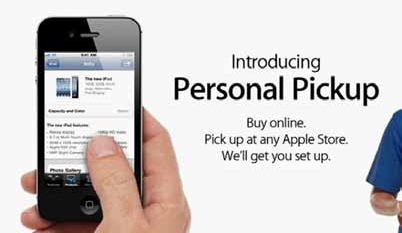
The companies which fall in the former category have many physical stores all across India and the only way out for such brands to stay afloat is striving towards Omnichannel marketing. As consumers move seamlessly between digital and physical channels, even during the same shopping trip, the lines between online and in-store shopping is getting blurred, and reaching out to consumers through all possible shopping points is becoming imperative. Every marketer should remember that consumers are no longer entering a particular channel but always are there in the channel interacting with our brands. Omni Channel retailers should get out of thinking in silo about the particular channel and should start focusing on leveraging all the channels to provide a seamless brand experience. Future Group is planning to invest ₹ 100 crore over next 18 months to provide consumers a single view of its many brands across physical and digital channels. This completely now justifies the move by various companies to open up their own e-retail sites and offering Buy Online Pick In-Store (BOPS) option. Apple is known for its BOPS option where the customer can place the order online and collect it from the nearest store within hours after ordering. Customers should be able to shop online and exchange products at any physical stores. A lot of the stores are spending huge amounts infusing a lot technology to provide an easy, convenient and seamless shopping experience. Omni Channel Synergy is THE way out for these retailers to make their B&M stores relevant today. The toughest part is answering the question from the local mom and pop stores’ perspective. With very little financial muscle, for them to stay alive is to tweak their strategy to make it their store relevant to the locality they are serving. The biggest advantage for such stores is the ability of offering customized, personalised service and they should leverage this advantage to enhance the stickiness factor towards their store. 
With all said, the major takeaway for every marketer should be that physical stores are relevant still in today’s context and henceforth will play an instrumental role in the growth of Omni-channel retailing. 
Reach me at 8415921950 or mail me in the id ramanathan13@iimshillong.in or ping me in FB ID https://www. facebook.com/ramanathan.kathiresan.5 for sharing your
valuable feedback

The lexicon of Brands from Markathon

The lexicon of Brands from Markathon

No, A isn’t for Apple and
D is not for Durex

This lexicon of brands lists some memorable Indian brands that we grew up with. While some have been displaced by multinational brands, others still rule the roost. A lexicon of brands that looks at the curiosity of sorts that the Indian market has proven to be for brands which came into existence before or soon after the opening up of the economy and how they coped with the flux that resulted from it. 

Archies – Before the Hallmarks of the world and way before Chumbak, Happily Unmarried and other such kitschy outfits entered the ‘social expression’ space, Archies helped India express itself with Holi, Diwali and Rakhi greetings. Started in 1979 by Anil Moolchandani, the company is now present in 120 cities in 6 different countries. It went public in 1995 and was listed in the NSE and BSE in 1998. “The most special way to say you care” is still around in the times of ‘HBD’ posts and virtual cakes on facebook. 

Burnol – It is one of the oldest antiseptic cream brands in India and has changed hands many a times, starting off with Boots, being bought over by Reckitt Piramal in 2001 and finally coming to rest in the brand portfolio of Dr Morepen Labs which marketed it as the “Burn Specialist” creating a high recall among Indian consumers and reaching the first-aid kits of almost every household in India. 

Camlin – now known as Kokuyo Camlin with Kokuyo of Japan acquiring 51% stake in the company, Camlin was started in Mumbai in 1931 and still the market leader in producing art materials such as watercolours, poster colours, pastels, acrylics, and stationery. What started as Dandekar & Co that began to produce Horse Brand ink powders and tablets evolved into the maker of Camel Ink for fountain pens went down as the stationery brand that almost every Indian child went to first day of school with. Every kid before the 1990s for sure! 

Duckback – started in 1920 in Kolkata by Bengal Waterproof Works Ltd now (Bengal Waterproof
Ltd), Duckback ruled the roost of rainwear in India for many decades before it was put out of its leading position by increasing rubber prices and a failure to innovate to more modern products. The company made a comeback in 2012 and now manufactures soft and hard luggage options amongst other things. Duckback was one of the foremost ‘swadeshi’ brands to appear on the horizon. 

Essel World – India’s largest and foremost amusement parks has withstood the brunt of a booming travel and tourism industry. Operated by Pan India Paryatan Private Ltd (PIPPL), a subsidiary of the Essel Group, the very mention of the amusement park still summons to mind the jingle “Essel world mein rahunga main, ghar nahi jaunga main”. Essel World and its younger cousin, Water Kingdom, have remained iconic Indian brands. 


Fryums – So those colourful ‘snack pellets’ that are often the only things that add colour and crunch to mess food across the country were actually launched by TTK Healthcare. If too much of a good thing was ever bad for a brand, then the brand was definitely Fryums. Fryums became popular and thereafter turned into a generic brand in its own right. So much so that other manufacturers began to manufacture ‘fryums’ too and slowly the brand was lost but the  product’ Fryums endured. Not particularly to the advantage of TTK Healthcare, of course. 

Gili – India’s first jewellery brand was launched in 1994 and is credited for introducing many practices in the thriving jewellery industry in India. It was the first jewellery brand to sell in departmental stores and to have uniform quality and designs at all its stores across the country.


Hero Pens – Not an Indian brand, but it has been a part of every Indian kid’s childhood, nonetheless.
Hero Pens, with their hooded nibs were the first fountain pens that most of us began the journey of
endless hours of scribbling with. Founded in 1931 as the Huafu Pen Factory, the Shanghai Hero Pen Company owns the brand of Hero Pens which can still be found with retailers online and offline as well. 

Indrajal Comics – Brought out by Benett Coleman and Co – the publishers of The Times of India, Indrajal Comics first brought to India Lee Falk’s Phantom stories and progressed to his Mandrake stories, Alex Raymond’s Flash Gordon, Allen Saunders’ Mike Normad, Kerry Drake and many more. Though they stopped publishing in 1989, in the 27th year of Indrajal’s existence, old prints can still be bought off eBay and in dusty second-hand book stores in the forgotten by-lanes of old cities that reek of nostalgia. 

Jumbo Circus – Started by Badnasheel, a businessman, in 1976, in the city of Calcutta, Jumbo Circus is credited to have brought the entire circus scene to India. With acts ranging from acrobatics, to ‘boneless acts’ to animal shows, which are now banned, the circus continues to be staged even today in cities such as Chennai. In the times when television was only just crawling into India, Jumbo Circus made leaps and bounds in the entertainment business. 

Kismi – the ‘elaichi’ flavoured sweet from Parle Products was launched to serve as a mouth freshener. Available in Kismi, Kismi Gold and Kismi Toffee Bar, the sweet has been a favourite over many years and still occupies shelf-space in mom and pop stores across the country. Often alongside other landmark sweets such as Mango Bite, also from Parle Products Ltd.

Liberty Shoes – Based in Karnal, Haryana, Liberty Shoes was perhaps the first shoe brand that most
of us dawned when we stepped into school on our first day, even before Bata came and buckled our tiny feet with its offerings. Currently the brand is present in over 6000 multi-brand outlets across the country and has a presence in over 25 countries through more than 50 stores. Mysore Sandal Soap – In production since 1916, Mysore Sandal Soap is manufactured by Karnataka Soap and Detergents Limited, a subsidiary of the Government of India, the soap and its iconic packaging have almost become a part of the heritage of South India. Loyalists of the soap still hunt it down from the elusive stockist or order online. Nataraj Stationery – Established in 1958, Hindustan Pencils Ltd is the largest pencil manufacturer in India, with the brands Nataraj and Apsara being exported to over 50 countries. Their state-of-the-art manufacturing units with latest machinery set up daily produce 7 million pencils, 1.5 million sharpeners, 2.4 million erasers, 0.2 million scales, 0.8 million pens.

Original Choice Whisky – John Distilleries Pvt Ltd which owns the brand Original Choice Whisky also manufactures rum, brandy and other distilled alcoholic beverages which it markets under more
than 10 brands. Set up in 1992 in Bangalore, it has 16 manufacturing units in 12 states and revenue of
over Rs 9 billion. Another home-grown brand that has largely remained obscure.

Parry’s – EID Parry, which has been in business for more than 225 years, has many first to its credit. It was the first company to manufacture fertilisers in India and is currently engaged in the production of sugar and sugar-based goods. It is an instantly recognisable name in India, especially its southern parts and is known for its collaborative efforts with sugarcane farmers.

QuickChek – Another one of Dr Morepen’s products, QuickChek was the first pregnancy test kit
manufactured in India. Its promise was that it delivered results in a matter of 5 minutes and offered
easy-to-read results. One of the brands which did not really catch on, but was nonetheless worth a mention due to its pioneering efforts.

Rasna – Owned by Pioma Industries in Ahmedabad, Rasna was launched in early 1970s and is still popular today, to the tune of having more than 82% share of the soft-drinks concentrate market in India. Apart from gaining ground against the mainly carbonated soft-drinks market that emerged in the 1990s, Rasna was also the first brand to centre its communication around the child being the influencer in the purchase of soft drinks and implanted its tagline “I love you, Rasna” in the minds of more than one generation of Indians.

Spykar – Started by Prasad Pabrekar in 1992 to introduce some home-grown competition to the Levi’s, Pepe Jeans and Lee Coopers of the world that were making themselves comfortable in the country, Spykar is now a Rs 500 crore brand and recently Kishore Biyani’s Future Lifestyles bought a 75% stake in the fashion label. Created with a premium feel, using mostly foreign-looking models and locales for its communications, Spykar attempts to create a presence in the minds of the Indian youth by alienating itself from the country of its origin.

Topaz Blades – manufactured by Malhotra Shaving Products, Topaz Blades and Laser Razors are now present in countries across the world, with a strong presence even in the quality-conscious countries such as the USA, countires in Europe and the Middle East.

Uncle Chipps – “Bole mere lips, I love Uncle Chipps” – the jingle not only rang in the market leader in snacks in the 1980s, but also launched film director Shantanu Moitra’s career. In 2000, the brand Uncle Chipps was bought by Frito-Lay (PepsiCo’s snack division) from Amrit Agro Industries Limited for $6.6 million.

Vadilal – from a hand-cranked soda fountain to being the second largest ice-cream player in India
with a brand worth over $4.5 billion, Vadilal has come a long way. Started in 1907 in Ahmedabad by
Vadilal Gandhi, Vadilal now has significant exports and a diverse range of offerings – from frozen goods to ice creams. It is the quintessential Indian brand whose true worth and reach are often undermined because it blends so well in the background, where it has been for really long!


Williamson Magor – Now McLeod Russel India, Ltd, Williamson Magor was established in 1869 and it accounts for a production of 100 million kilograms annually, from estates in Assam, West Bengal, Vietnam and Uganda. It is one of the foremost exporters of tea in the world.

Xmex – Started over 15 years ago, Xmex is India’s first plus size fashion store now has considerable
retail presence – of over 1000 multi-brand outlets in cities like Mumbai, Delhi, Chennai, Pune and Kolkata. It also has a thriving wholesale business and its products can be ordered online from a number of etailers. Perhaps a harbinger of the ramifications of a shifting lifestyle, the brand makes the list for being ahead of its times in capturing a market that seems to be ominously hurtling towards reality. Yezdi – Ideal Jawa Ltd, popularly known as Jawa started operations in 1961, with the help of former Czechoslovakian Jawa Limited and by 1968 had established wholly indigenous manufacturing of motorcycles under the brand name Yezdi. The idea was to offer consumers a product that was home-grown and offered value for money. The tagline “Forever bike, forever Value” was coined to reinforce the same and the ideals of the brand remain unchanged even today, in the face of stiff international competition.

Z talc – Led by the vision of four brothers Sunder, Guna, Mohan and Shivaram, Argus Cosmetics was launched in 1992 to serve the needs for male grooming products, a category that the brothers believed was neglected by leading players in the industry. The first product to be offered was the Z-talc and the product portfolio soon expanded to include face.

BY VARSHA
IIM SHILLONG     

iPhone 6 # Bendgate

Winner: Nirna Nevrekar | Goa Institute of Management


Honorary Mention: Sai Sashanka Paladugu | IIM Shillong


An imperative tool for Customer Retention

Retail loyalty programs are common place today. From Mom & Pop stores to large super markets, almost every other retailer has some form of loyalty program. Some offer instant gratification with upfront discount, some offer threshold vouchers, some are currency based etc. However, the success of retail loyalty programs, regardless of their structure, remains indistinct to business. Despite significant investments, most retailers are still unsure about the real value creation by their loyalty programs. They tend to think loyalty programs are just a line item between their Gross and Net profit and an attribution of economic impact of any form (to the loyalty program), is highly disputable. There are potentially two scenarios that emerge in the context of retail loyalty. In the first, the program is integral to the brand and often program loyalty is inseparable from brand loyalty. But in the second scenario, where the loyalty program services many brands (for eg: a retail conglomerate which has many retail brands), it is especially challenging for the program to be considered as an effective mechanism for value creation.
Why? Research suggests that the answer to this lies in both retail loyalty strategy and its execution. In many instances, great strategic blue-prints not being adequately supported with the right execution while in other cases, strategy itself was flawed. Based on the results it is visible that lack of Fitness for program purpose and inability to achieve goal congruence within internal actors as strategic issues and an ineffective management control and suboptimal accounting framework as key execution failures. This paper discusses each of these issues in detail. Strategic Issues 1. Most retail loyalty programs claim to exist to increase customer retention. However, most firms don’t have a clear basis to identify if their customer loyalty is transactional, functional or attitudinal. Brands often claim that they do not require any loyalty program for inducing the first two forms of loyalty and quite rightly so. The acid test of a program is to be able to become a force multiplier on the top of the retail brand and induce the third form of loyalty. Today, programs just can’t compete based on direct value payout or functional features and functionalities alone, as these are highly replicable. It has to create experiential differentiators which would work as a perceptual exit barrier for customers. It should make customers immune to either some tactical play of competition or acceptable price increase by the firm. To this effect, the first step is actually to agree on a whole set of economic and non economic activities which can be attributed to the loyalty program without much dispute. The second step is to create a robust measurement framework around these agreed activities. 2. The objectives are determined, it is to establish goal congruence between various internal actors through a robust performance management model. This is the key to foster collaborations within the organization. Cross functional KPIs need to be agreed upon between the program and the various functions. It is good to start by identifying how loyalty can potentially impact the whole retail value chain, after base-lining the performance. While the impact of loyalty is usually felt on the down-stream part of the value chain, programs often struggle to establish its impact on the up-stream part. Execution Related Issues 1. Mostly, retail loyalty programs are configured either as an independent cost centre or as a part of larger shared services. They usually do not enjoy the structural empowerment to decide their own budgets. Even the direct payout to the consumers is decided primarily by the brands, where program managers have very little to no say at all. While some retailers did experiment with some innovative structures like placing the entity at an arm’s length and transfer pricing relationship with the brands, none saw much success. Instead they ended up alienating the categories. Management empowerment of the loyalty function should be progressively done based on the ability of the program to achieve certain performance thresholds for a given maturity. While an absolute lack of empowerment may deem the program ineffective, disproportionate and untimely empowerment may end up dividing the organization. The balancing act is in drawing the control boundary, in a manner that awards the program enough discretion, to execute its agenda, without alienating the brands or the categories. The boundary needs to shift outward as the program matures and the value creation through loyalty program becomes increasingly less disputable. 2. Retailers all over the world tend to treat points as cost upon issuance. However, this cost is often recognized as marketing cost and is expensed below Gross Margin; making redemption or breakage as a mere recovery of that cost. The problem tends to worsen, especially in the case of retail conglomerate, where many retail brands participate to form a mini coalition within the same program. Typically the brands which experience higher accrual than redemption are the ones who clamour the most. Success Imperatives While strategic challenges tend to cast a long shadow over program’s effectiveness, most programs’ incapability to harness the power of analytics to prove their worth is also to be blamed. Most of the retailers we interacted with had concurred saying, they would not hesitate to allocate more management resources to the program; if it can prove that doing so has a value. This is exactly where most of the programs fail. They fail at many levels – from target setting to measurement. Retail programs are plagued with lack of clarity and consensus. While most retailers continue to struggle with excess operational challenges ranging from stock availability, excessive mark-downs, growing reverse logistics spend or vendor negotiation, loyalty comes far down in the pecking order. Loyalty program should view all of these as their opportunities. If the program really wants to grow in prominence, it needs to share the responsibility of alleviating each of these issues with the various actors and leverage data to prove their contribution. Broader changes would fall in place, subsequently. BY SUBHRA PRAKASH NASKAR VGSOM, IIT KHARAGPUR

Google Android One: Sure-shot success or an ambitious product?


ABHISHEK GOYAL
NMIMS MUMBAI

Google Android One offers 1.3 Ghz quad core processor, 5 mp rear and 2 mp front camera, 1 GB RAM, 4 GB ROM, and 4.5 inch screen in addition to latest Android version(4.4 Kitkat) at price points Rs 6499, Rs 6399 and Rs 6299 by Micromax, Karbonn and Spice respectively. Google is looking to differentiate Android One devices through software upgrades, more local languages support and value based pricing. But majority of the target market is not aware or concerned about software upgrades. Moreover, the device partners are themselves competing against Android One phones by already offering similar or better hardware features at almost same price. Also they have plans to launch phones in the Rs 5000-6000 range which will use Android but will be out of Android One programme. In addition, there is tough competition from non-partners’ products like Moto E priced at 7000 and Xiaomi RedMi 1S priced at 6400 with 1.6 Ghz, 8 mp camera and 4.7 inch specifications. The points of differentiation being portrayed by Google are in fact points of parity for the consumer. On the other hand, it is losing on points of parity too. For instance the battery in these devices is 1,700 mAh whereas non Android One devices in the same price range offer 2000 mAh battery backup. The build quality is inferior to Moto E or Xiaomi RedMi 1S. The USP of Unmodified Android technically called as Stock Android has already been taken by Moto E. On the whole, it does not seem to be a sure-shot success with its current value proposition. As of now it seems to be an ambitious project by Sundar Pichai, Senior Vice President, Google.


RAVI SINGH
SBM, NMIMS MUMBAI

Google’s Android, propelled by its open source nature and high customizability, has become the most dominant mobile operating system, with an estimated market share of 85% (IDC Q2 2014). Now the internet power house has launched a smartphone with a Quadcore processor, 5 Mega-pixel camera, 2 Mega-pixel front camera, FM Radio on a 4.5-inch FWVGA(480x854p)IPS display along with features like Dual-Sim & preloaded Google Apps - All at a price point of Rs.6399. Google has realised the potential of India to drive the smartphone market, serving as a launch platform for its mass-market devices and softwares – (Google messenger!!). The importance of the market can be gauged by the fact that Sundar Pichai, himself came to India to launch the smartphone. Google has already partnered with Micromax, Karbonn, Spice and chipmaker MediaTek, while hardware manufacturers like HTC, Intex, Lava, Lenovo, Panasonic, Xolo and chipmaker Qualcomm are waiting in line to get a piece of the Android One pie. Android One itself, is like a reference platform where any OEM, such as Micromax or HTC can choose pre-qualified components and software to make their own version of the smartphone. Apart from keeping costs low and reducing time to market, this model enables smaller OEM at expense of larger ones such as Samsung. At this price point and hardware/software feature combination, Android One seems to offer “value for money” and an experience which will help it tap into the aspirations of users in a country where only 14.5% of the Mobile pie is owned by smartphones. Google’s strategy is to capture the exponentially increasing internet user market in Indian and get them on Android early on For Google, Android One seems to fit in as - A sure-shot success formula to reach the next 5 billion smartphone users!!!