Showing posts with label December 2015. Show all posts

Saturday, February 6, 2016

Updates || Harsha Daga || IIM Shillong || December 2015 edition

NEW PRODUCT LAUNCH

TATA to launch hatchback called TATA Kite

TATA with its HorizoNext-the four pronged customer centric approach plans to launch TATA Kite. In a new teaser featuring brand ambassador Lionel Messi, the automaker christened TATA Kite Hatchback as the Zica. TATA motors looks to re-establish its image in the entry-level hatchback segment, where currently it had only Indica eV2, which again has lost its charm as it seems outdated when compared with competitors such as Maruti’s Swift and Hyundai’s Grand i10.

PULSE - latest candy launched by Pass Pass

The entry of this new candy into the market by Noida based DS Group (makers of products like Rajnigandha Paan Masala and Pass Pass) might not be new to people from states like Delhi and Rajasthan, but now the entire nation will be privileged to get a taste of it. A simple Re.1 candy is showing new trends, wherein consumers are making bulk purchases of 8-10 candies at once as against a usual behavior of buying only a single piece at once.


BRAND WATCH

HDFC introduces sonic marketing by developing first ever MoGo

HDFC introduces sonic marketing by developing the first ever Mogo (musical logo). It’s for the first time that music will be used by a large, main stream corporate for purely branding purposes. HDFC plans to use their mogo at various touchpoints at a pan-India level, through ATMs, phone banking, mobile banking app and the website. The company aims at capturing the interests of the youth as use of new age technology and ways of branding not just appeals to the target but also establishes a better recall probability.
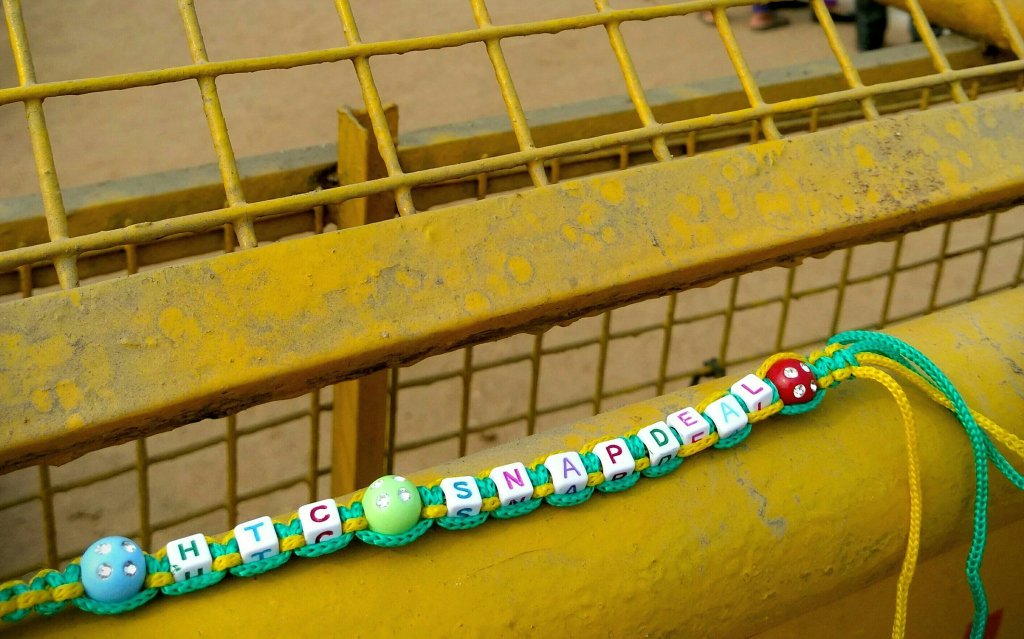
HTC & Snapdeal: The newly found friendship

In a very trendy manner, HTC and Snapdeal not just captured the hearts of Delhi-ites but also twitteratis across the network. They announced their partnership in a storyline when executives from both the companies went across NCR clicking pictures of the monuments, streets and people. They tagged each other in every post by eliciting response by the other one. They also used the opportunity to market the fine camera of HTC’s upcoming phone One A9. Looks like this team is here to give others a ride for their buck.


AD WATCH

Happydent makes the world go bonkers!

Though this ad is not a new one, it deserves a mention this time around as it is the only Indian ad to feature on the prestigious list of the Best 20 Commercials of the 21st Century, as per the Gunn Report. Prasoon Joshi from McCann Worldgroup India, the creator of this ad deserves accolades for capturing the attention of the consumer in the most quirky and innovative way that could be. All we Indians were in love with this ad, and now, the world is going bonkers over it.

Durex calls upon for Unicode Consortium

While all other condom brands are struggling to hold ground and going the usual “pleasure” way to advertise, Durex always has something much more interesting. And this time to on World Aids Day on December 1st, Durex encouraged its customers to call upon the Unicode Consortium, who oversee the introduction of new emoji, for an emoticon depicting safe sex. Their aim was to make more and more people comfortable to have a conversation about the importance of Safe Sex, and hence a condom. What a way to integrate societal marketing with digital media.

Scrabble’s new ad says more than just playing with words

“Words” is the first thing that strikes you the moment you come across Scrabble, but their new advertisement capturing the same in a set-up that is most expected in the holiday season, is so exceptional that feelings become the more dominant proposition for the board game. Leveraging the festivities and the spirit of joy and celebration to connect with their consumers they ensured to pull their attention towards the game with the use of anagrams.


NEW BRAND LAUNCH

Aeropostale forays into Indian markets with Arvind Lifestyle

The American apparel and accessories retailer plans to foray into the Indian markets in collaboration with the Arvind Group of Arvind Lifestyle. Aeropostale is a mall-based retailer targeting young women and men, hence reaching out to a very large segment of the Indian retail population. The brand aims at having 30 standalone stores along with 25 shop-in-shop (or multi-brand retail store) locations in the next three years.

The Moson’s group announes a new brand by the name of Indian Woman

The Moson’s Group, a Kerala based maker of Indulekha range of personal care products which has been acquired by HUL, has announced a new brand by the name of ‘Indian Woman’ under which it will sell non-personal care products. They plan to do the same through the Self Help Group (SHG) model with the primary objective of providing quality education to the to the Indian girl child.


NEW CHANNEL

Mobile Advertising - Tango Media

Tango media, a subsidiary of Mogae Group, launched a mobile advertising platform helps the companies in connecting with consumers, without the pre-requisite of data connectivity. Its patented technology uses keywords that it sells to various players who can directly communicate to the customer keying in ** followed by the particular keyword. Tango has currently tied up with five telecoms for carrying out the activity, hence reaching out to a humongous consumer base.


Radical Thoughts - Aligning Brands with Social Causes || Shubham Shukla || IIM Shillong || December 2015 edition

Aligning Brands with Social Causes

Shubham Shukla 
IIM Shillong

There was a time when companies believed in just giving the customers what they want but now they are moving towards portraying their support for social causes and wellbeing of the society in general. Apart from trying to fulfill their Corporate Social Responsibility (CSR)
requirements, this is also being done in order to gain the attention of the customers and stay in sync with what they want. According to studies, more than 85% of millennials correlate their purchasing decisions (and their willingness to recommend a brand to others) to the responsible efforts a company is making. The primary reason for this is that millennials grew up in the information age, where the Internet and social media forced transparency for the companies. They want the companies to work with a strong sense of ethics, to operate transparently and responsibly, act as a positive agent of change in their communities, and give back. They also realize that companies today have more tools at their disposal than ever to make a difference – they’re more global than ever, with fewer language barriers, more technology, and greater access to NGO and public private partnerships. Aligning your brand with a positive cause cultivates a more caring image in the minds of the customers. In a market where the where there is not much significant difference between your product and your customer’s associating your brand with a significant social issue or charitable cause can give your customers a new reason to pick your brand over competitors in the market. Championing a social issue or engaging with charities is a worthy way to boost brand equity and invest in a little feel-good-factor. Aligning marketing activity with cause related issues enables brands to build a reputation with their target market and building an emotional connection can help strengthen brand loyalty. Customers feel they are extending the value of their purchase to include a worthy cause investment and are more likely to be repeat purchasers. Not just attracting consumers, aligning your brand with social causes or cause marketing as they call it also helps to keep employees motivated. According to findings,
employees who are active in company causes are happier; 93 percent say they are proud of their company’s values, while 92 percent say they feel a strong sense of loyalty to their company. Apart from the customers and employees, cause marketing also helps to attract worthy stakeholders towards your business. By associating yourself with social causes you also attract those stakeholders to your business who believe in the same cause as your company. Not just that, they also tend to be more involved in the process and feel more committed towards their partnership with the firm. Thus, aligning your firm with social causes in the present scenario is not only necessary to fulfill your CSR commitments but for the overall health and well-being of your brand and its equity.

Brand Story - Zara || Daksh Bhagat || IIM Shillong || December 2015 edition


It comes as no surprise that Zara has become the world’s largest retailer and its founder, Amancio Ortega, has become the 4th richest man in the world. The brand started off as a small dress-making factory in Spain in the year 1963. 10 years later, Ortega opened a small store named as Zorba in La Coruna, Spain with a budget of a just 30 Euros. The store was later named – “Zara”. By 1989, more than one hundred Zara outlets had opened up in Spain, all of which became renowned for the choice of their location.

Imagine yourself in an apparel store with an entirely new collection, matching the latest fashion trends and completely different from what was on the racks when you visited the store two weeks back! Seems possible in a utopian world? Zara has turned it into a reality.
When Zara entered the midrange clothing market, the market was already dominated by players such as Corte Inglés and Cortefiel. In this scenario, Zara’s positioning of quality with affordability worked well, as neither of the two existing players appealed to youthful fashion sense. The company's first annual report, which was produced in 1999, outlined Ortega's goal, stating, "Zara's aim was to democratize fashion. In contrast to the idea of fashion as a privilege, we offer accessible fashion that reaches the high street, inspired by the taste, desires, and lifestyle of modern men and women". To realize this goal, the company followed the fast-fashion model, which involved bringing clothes from design stage to stores in a matter of few weeks where most other fashion brands would take a whole six months to get their new designs into the market.
Zara has a unique policy of “Zero investment in marketing”. Instead, the money saved here is used to open new stores. The striking feature about Zara is that it has noticed differences that matter to the consumers and used them to differentiate itself from the rest of the competitors. In other words, its key marketing strategy is based on exclusivity, experience, differentiation and affordability. In essence, the company relies heavily on the word of mouth advertising. The products’ target population lies in the age group 18-40 years and lives in the urban areas. Specifically, the market segment comprises of women (65%), men (25%) and children (15%) all of them being fashion conscious and falling in the educated middle class category.
Zara’s branding strategies were executed keeping in consideration the fact that clothes are a perishable commodity that people love to use and throw away. The designs were mostly spotted in fashion shows and then copied by in-house designers. The strategy was to ship fewer pieces, in greater variety, while trying to avoid high inventory costs and the frequent clearance sales common amongst most fashion retailers. The company produced only what would sell in its shops.
One of the things that make it a stand out brand is the fact that it is a vertically integrated retailer. From designing to manufacturing and distributing the products, it does everything by itself. This approach seems to be working for it because it has managed to establish itself as one of the leading Spanish fashion stores globally.  90% of Zara stores are owned by the company and the rest are joint ventures of several franchises. This means that customers experience the same environment when entering one of the Zara stores be it in London, New York, Paris, Rio de Janeiro, New Delhi etc.: the stores are spacious, well-lit, modern and walled with mirrors.

Zara has an official IPhone APP. This application is designed to have the ability to let browsers search through the latest information regarding new collections. In 2010, there was a lot of negative feedback regarding the functionality of the application. Zara has taken all of the negative review in consideration and immediately improved. The application now includes prices, locations, GPS map, and contacts to the specific shops you select to browse in.

One of the things that speaks volumes about Zara’s strong culture is the fact that it that it hires young designers and trains them to make quick decisions. In other words, while good decisions are encouraged, bad decisions are not severely punished. Facing several problems related to rent space, every mall owner in the World is ready to provide free space to Zara, owing to the popularity of this brand in urban areas and the long way it has traveled.
The culture of an organization like Zara takes years to hone and requires leaders with more than an understanding of numbers-they need to have a feel for the human component. It’s a classic example of a successful supply chain network and a learning for many budding entrepreneurs venture in the domain of merchandising.

AD-Dicted - Catch or Miss || Astha Kabra & Sharad Srinivasan || IIM Shillong || December 2015 edition


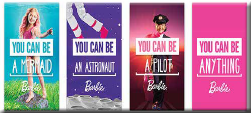
PRODUCT: Barbie : Imagine the Possibilities


CATCH


POSITIONING: When a girl plays with Barbie, she imagines everything she can become

CREATIVE AGENCY: BBDO, San Francisco


YouTube Link: https://www.youtube.com/watch?v=l1vnsqbnAkk


CONCEPT: 


The two minute advertisement quite brilliantly captures, through hidden cameras, five girls pretending to be professionals in real life environments. Where one girl is a college professor, teaching a group of students about the brain, another girl is a soccer coach instructing her confused team of male athletes to kick those "knees up like a unicorn!" Others include girls enacting the jobs of tour guides, veterinarians and corporate business women. All of this was done to unsuspecting real-life audience, which was definitely pleasantly surprising for everyone.

VERDICT: Catch 

Markathon believes that, considering the scrutiny that Mattel has been going through because of Barbie, the commercial is a welcoming change to turn the company around. The women empowering advertisement with contagious optimism very aptly conveys the idea of ‘imagining the possibilities’ and at the same time creates an emotional bond about the importance of Barbie in a girl’s life. All in all, with 16 million YouTube views in two months, the advertisement will definitely have a positive impact for the brand. Because who wouldn't want to take a life lesson from a little girl?

MISS

PRODUCT: Indian Terrain: Where I BelongPOSITIONING: When a person dons Indian Terrain clothing, he experiences a sense of belongingness which only his home can provide him with.


CREATIVE AGENCY: Unknown

YouTube Link: https://www.youtube.com/watch?v=KRgLI8GV6Vc


CONCEPT: 

The setup of the advertisement is in a classy, upscale home in which a man is walking
and thinking to himself. He is projected as a successful, self-made man who has travelled the world and gained significant wealth. But during the course of his career, the experiences he has had have led him to develop a new perspective on life. He looks at all his belongings and thinks back on all that he has achieved. He longs for a sense of belonging which none of his successes have been able to give him. The advertisement ends with the man putting on Indian Terrain clothing and realizing that what he really wants is to go back home, and the Brand Name – Indian Terrain flashes on the screen.

VERDICT: Miss 
Markathon believes that the advertisement fails to connect the idea trying to be conveyed with the product offering of Indian Terrain. For a first time viewer, it would be difficult to imagine what exactly Indian Terrain is trying to sell. Also, although the idea by itself is powerful, the flow of the advertisement is not catchy enough to keep a first time user hooked on to it. All in all, the advertisement fails focus on the basics i.e. product description/details and viewer engagement, making it an easy to forget ad.

Eye2Eye: Snapdeal bears brunt of Aamir Khan's statement : Intolerant India or flipside of celebrity endorsement? || Anil Kumar Diddy & Anjali Sharma || IIM Ahmedabad & Chandragupt Institute of Management, Patna || December 2015 edition

Snapdeal bears brunt of Aamir Khan's statement : Intolerant India

Anil Kumar Diddy
IIM Ahmedabad

Amir Khan is well-known for taking a stance. In India, most of the celebrities would refrain from making public statements about issues concerning the society. We must admire Amir for his brave acts of putting across his opinion. Recently, Aamir expressed his fear of the happening adversities in India. He played the role of an average citizen telling how they would react to such news. However, netizens started to protest by degrading or uninstalling the Snapdeal app. This behavior indeed solidifies his argument of growing intolerance in India. If you protest against a person who calls you intolerant, doesn’t it prove the former’s point?
In fact, this is disagreement, not intolerance. It’s the social media that has made easier for us to express our opinions. If a protestor believes that Amir’s statements to be detrimental to the society, they should act in a way that changes the world to a better place to live. Portraying their disagreement by uninstalling an app and doing nothing else would only lead to people staying reticent or talking only about good things. It is not desirable as it would not encourage the country to identify the important issues to resolve them.
On the other side, customers portray their adulation by using the brands endorsed by their celebrities. It develops a sense of attachment to the celebrity and the brand. It brings in customer loyalty to the brands too. However, sometimes when ‘The Idol’ remarks in an unexpected way, the customers tend to abandon the brand and the celebrity too. Thus, celebrity endorsement is a double-edged sword. However, the #AppWapsi campaign has worked well in favor of Snapdeal. News reported that the Snapdeal’s rank on Google’s Playstore had improved a few days after the campaign. It is a blessing in disguise for Snapdeal.

Snapdeal bears brunt of Aamir Khan's statement : flipside of celebrity endorsement

Anjali Sharma
Chandragupt Institute of Management, Patna

Snapdeal has been a major E-commerce player in India. In recent times, the company is facing a major turbulence after its Brand ambassador Aamir khan who was signed for a whooping amount of Rs. 15 crore, made a statement about rising intolerance in the country. Twitter is flooded with #Appwapsi campaign and people are uninstalling the Snapdeal app and downgrading Snapdeal’s app on the Google play store.
The entire episode raises the very apt point, whether Snapdeal is facing the adverse effect of the celebrity endorsement. The Celebrity endorsement is a double edge sword. Shimp (2000) said that there are four critical factors affecting celebrity endorsement namely the credibility of the celebrity (the credibility is a function of expertise and trustworthiness), Celebrity and audience match up, Celebrity and Brand match up and celebrity attractiveness. The most famous example has been the Cadbury case where Amitabh Bachchan (Famous Bollywood actor) helped the Cadbury brand in getting over the Worm episode. But sometimes the story can be very different when a strong brand gets affected because of the negative image of the celebrity or some controversy surrounding the celebrity. Whenever the celebrity gets surrounded by some negative sentiments (Just as Amir khan found himself at the centre of intolerant debate) the trustworthiness of the celebrity takes a back seat and that loss of trustworthiness gets replicated in the loss of trustworthiness for that specific brand which the celebrity is endorsing, as the target audience more often than not thinks of the celebrity as a corporate image and symbol of the specific brand. In this case the entire incident has led to loss of emotional connect between the Snapdeal and its target customer base which is clearly depicted from the tweets and facebook posts of the people.